All Categories
Featured
Table of Contents
Nevertheless, customer spending has actually stayed reasonably durable so far, permitting industrial need to continue growing regardless of downhearted sentiment readings. Inflation has cooled however stays above the Federal Reserve's long-term target. The core Consumer Price Index increased 2.5% over the past year, suggesting that borrowing costs may stay raised longer than numerous market participants had actually anticipated.
Labor market conditions have started to soften. Task growth slowed dramatically in 2025, balancing 15,000 new jobs each month, compared with 168,000 monthly jobs included 2024. Because work trends directly influence consumer costs and supply chain activity, the direction of the labor market will be an important aspect forming commercial demand in the coming years.
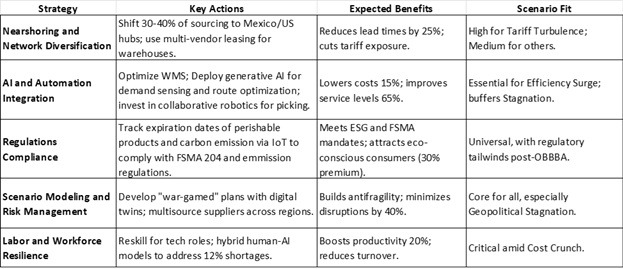
The design examines more than 40 economic and property variables, including making output, work levels, GDP development, imports and exports, transportation activity, and historic absorption data. Utilizing strategies such as Kalman filtering and exponential smoothing, the model represent seasonality and moving financial relationships, allowing the forecast to adjust to progressing market conditions.
Preparing the Logistics Framework to 2026 Growth
For developers, investors, and building companies, the projection indicate a market transitioning from quick expansion to measured growth. The remarkable industrial boom of 2020 through 2022 has cooled, however the underlying drivers of logistics demande-commerce, supply chain restructuring, and population growthremain firmly in location. Over the next a number of years, the market is anticipated to shift toward higher-quality logistics facilities, modernization of aging inventory, and strategic regional circulation networks.
While economic uncertainty remains an element, the data suggest that the commercial sector is approaching a more stableand sustainablegrowth cycle. And for a market that invested the past numerous years racing to stay up to date with need, stabilization may be exactly what the marketplace requires.
The Retail Supply Chain & Logistics Expo provides an unequaled opportunity to check out cutting-edge developments and solutions customized to your company requirements. Over the course of the 11th & 12th of November 2026 at Excel London, you'll connect straight with market leaders and suppliers to discover necessary strategies for improving logistics, boosting performance, and enhancing consumer satisfaction.
Evaluating Diverse Warehouse Management Models in 2026
Retail Retailers are cutting down on SKUs to enhance margins. Leading up to the pandemic, the typical grocery store brought in between 30,000 and 35,000 SKUs, up from about 20,000 a decade earlier. Some grocers offered 50% more SKUs per linear foot than their mass and worth rivals. Volatility in demand and thinning margins have actually since exposed the expenses of unproductive selections and duplicate products on racks.
Unlocking Primary Benefits of Multi-Channel Sales NetworksGrocery merchants are reducing and refining the number of items to better handle their in-store merchandising and keep stock consistent, while providing a positive shopping experience for consumers. With the ideal selection, consumers do not feel as though their options are limited. In fact, many report an improved shopping experience. As customers try to find brand-new methods to extend food budgets, promotions and seasonal purchasing periods may no longer carry out the exact same way they have traditionally.
Expert system can be used to evaluate SKU-level productivity and demand elasticity by modeling substitution habits. A logistics company with specific retail competence can assist you handle smaller sized deliveries efficiently, so the right products are in the right locations. Central purchase-order management and item-level exposure can help handle SKUs in genuine time and rapidly reroute even percentages of inventory to where it sells best.
What was once traditional lay-away has progressed into a set of sophisticated services that offer short-term, interest-free time payment plan. These programs have grown across both in-store and online shopping experiences, growing by 13% to over $560 billion internationally in 2025. By 2027, it's expected that over 900 million customers will have used purchase now, pay later.
These programs likewise increase the shopper conversion ratefrom "simply looking" to making a purchase. Amongst Gen Z consumers, that figure increases to 51%.
Leveraging Curbside Pickup to Enhance Store Efficiency
Merchants face operational difficulties with these deals because of higher return rates and complex chargeback management. Business that take advantage of buy-now, pay-later programs must evaluate and enhance their reverse logistics strategy and strategy for seasonal return spikes, for circumstances around the December vacations. The U.S. Supreme Court has actually ruled tariffs imposed under the International Emergency Economic Powers Act (IEEPA) were illegal.
New tariffs under other legal authorities are extensively anticipated. The administration has set up a short-term 10% tariff under Area 122 of the 1974 Trade Act. This tariff is restricted to 150 days unless an extension is given by Congress. The administration has actually signified it will change it with long-term tariffs under Area 301.

Latest Posts
Steps to Build a Scalable Logistics Network
Essential Tips for Linking Digital Inventory Systems
Designing Seamless Omnichannel Fulfillment Networks in 2026